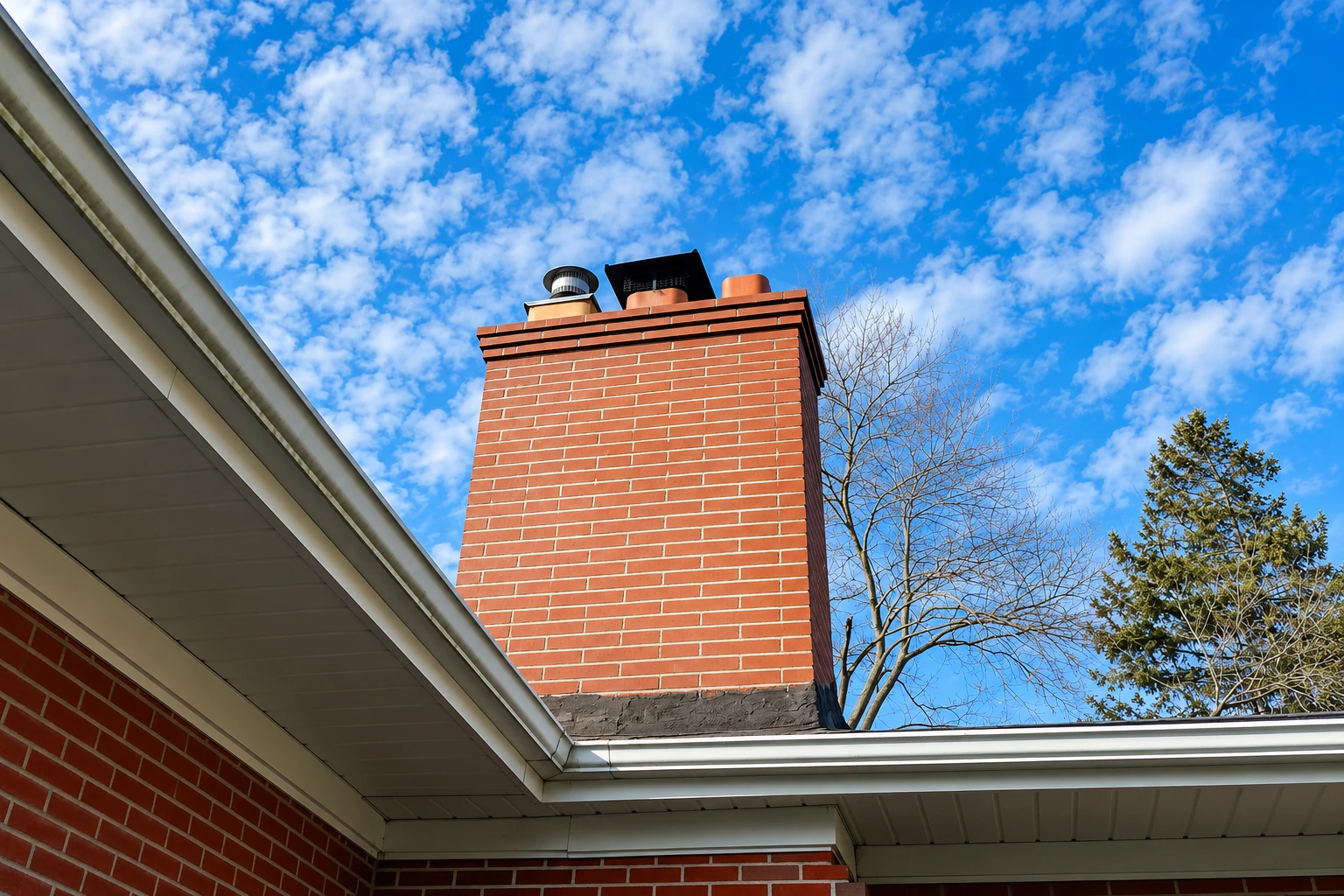
On every chimney I lay out two paths and explain what each one does for you, so you can choose. Simple upkeep means we repoint the worn joints and patch isolated cracks, which keeps the chimney tight and dry for everyday use. A sturdier repair is aimed at shaking, and it starts with how far down the damage goes, because San Bernardino County's guidance says that when earthquake damage reaches below the shoulder of the firebox, where it narrows into the chimney, the whole firebox and chimney get replaced with light-frame construction, a framed chimney instead of brick, above the foundation. So cracking that stops high usually means a partial repair, and cracking that runs low means a replacement. If anyone suggests a steel brace run down to the roof surface, the county advises against it, since those braces are thought to have helped chimneys fail in past quakes, and any brace has to be carefully engineered, so it's fair to ask how one was designed.
A chimney is often the first place worn masonry shows, so we look at the rest of the house too. If the walls have the same tired mortar, tuckpointing renews those joints, and if bricks are cracked or flaking on their faces, brick repair replaces them so the new chimney work isn't tied into failing brick.